

Daily vagus nerve stimulation to help you snap out of survival mode.












Constant, low-grade stress is why hardly any of us feel 100%.
yōjō activates your rest response
to support your body's ability to rest, recover, and self-regulate.


Features
Everything you need and nothing you don't
to make daily vagus nerve stimulation effortless.
.webp)

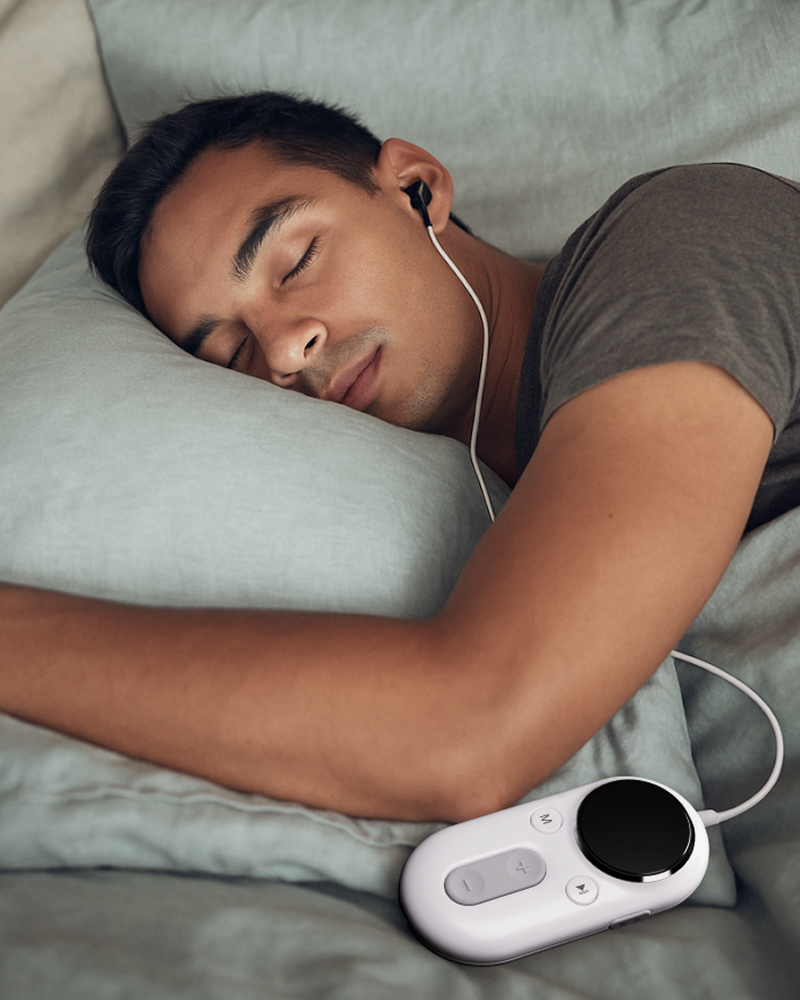
Stimulate your vagus nerve every day. Hands-free.


Track your well-being from session to session.


Work with your human coach to get the most out of yōjō.


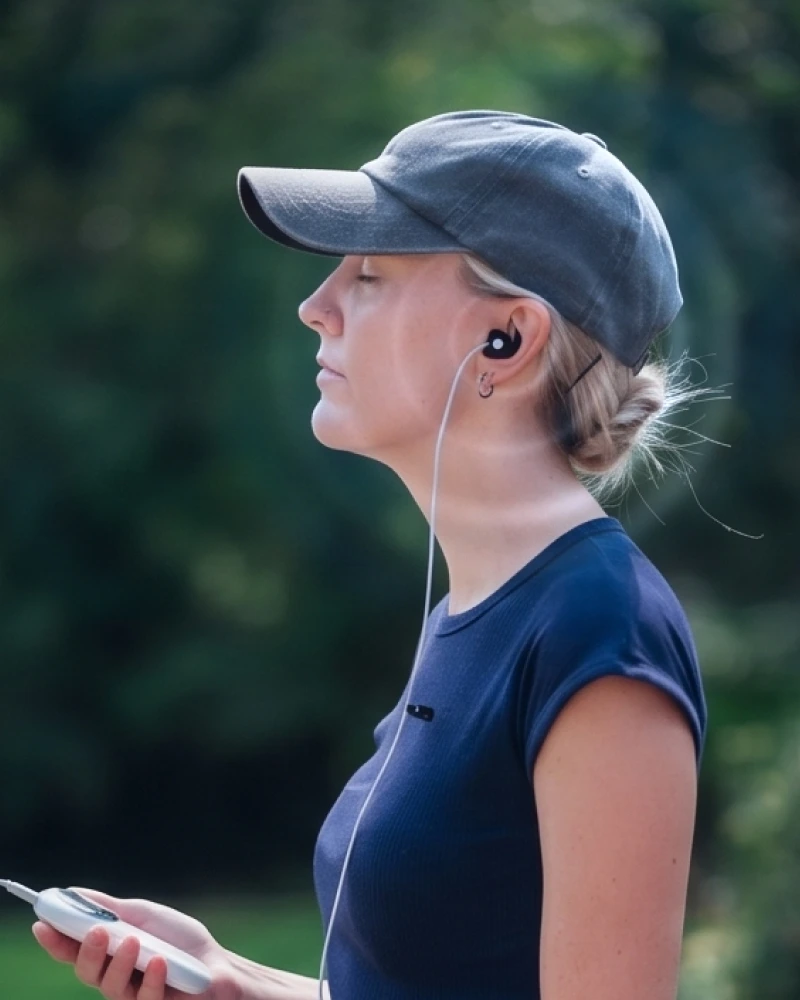
Self-activate your vagus nerve for on-the-go calm.


Understand nervous system flexibility and why it matters.



yōjō Device
Your vagus nerve stimulator

yōjō Membership
One year of expert support
Only £9.99/mo after that

Personalised wellness
Custom plan built around you

Human coaching
1-on-1 sessions with a health expert

Wellness tracker
Real-time biofeedback

VNS device
Hardware part of full ecosystem
You and yōjō
One simple habit that gives more than it takes

Capture pre-session metrics.
Stimulate your vagus nerve.


Capture post-session metrics.

Making yōjō yours.
A health professional supports your journey and adapts yōjō to your life and goals.


Benefits of daily vagus nerve stimulation

Testimonials
Our members notice deeper sleep, faster recovery, and better mood within days.

Other people have noticed the change in me.
Dihan

I have consistently had 6-8 hours of deep sleep for the past 3 months.
Leanne
On the evenings I use yōjō, my Oura ring sleep data is actually positively impacted.
Angela
I'm surprised how easily yōjō became a daily habit.
Tim
yōjō gives me a sense of calm when I need it most.
Carol
I don't get as worked up over little things, which is massive because I tend to spiral very easily.
Hannah
yōjō supports my focus and calm throughout the day.
Yaren
yōjō has helped me feel noticeably calmer, sleep better, and handle daily stress and tension with ease.
Dani
I slept through the night without moving, for the first time in what feels like forever. I honestly forgot what it felt like to wake up and feel okay.
Kirsten
I now feel calmer, clearer, and more in control.
Louise
What we're seeing
yōjō member data
Average increase in heart rate variability among low-HRV members in 6 months.

Average reduction in stress among high-stress members in 6 months.

Average boost in parasympathetic activity in low-PNS members in 6 months.

See if yōjō can support your unique goal

Unsure yōjō is for you?

Thanks. We'll be in touch.
Science
The science and wisdom that make it possible
Everything we do is backed by research, clinical experience, and real-world evidence.

André Boezaart

Gabrielle Adams

Navaz Habib

Lou Atkinson
Blog
Explore the science of better living

Article
May 8, 2026
time
-min
read
My yōjō Journey and What I Didn’t Expect
When I first started using yōjō back in December, I approached it the way I approach most wellness tools: open-minded but measured. Here’s what happened.
As a GP, I understand the science behind vagus nerve stimulation. I know the vagus nerve is the body’s master regulator, that it connects the brain to the body, and that it governs that all-important shift from ‘fight-or-flight’ into ‘rest-and-digest’. I know the mechanism, but I don’t think I really expected the impact.
I definitely wasn’t prepared for how much of a difference I would feel.
How I yōjō
My routine is simple.
Every night, when I go to bed, I grab my yōjō. I apply the gel to the earpiece and pop it in my ear. I find a comfortable intensity and then just let the gentle electrical pulses do their thing.
I also use it during the day when I remember. This is becoming more frequent because the benefits have become harder to ignore.
The sensation took a little getting used to — little electrical zaps that you have to set to your comfort level — but it quickly became something I looked forward to rather than something I had to remind myself to do.
What surprised me most
Sleep. Sleep. Sleep.
I’ve always been someone who can lie awake, mind whirring, tossing and turning for hours before finally dropping off. In the first few days of using yōjō, I noticed I was falling asleep faster.
At first, I put this down to coincidence, a good few days, or a placebo effect. But now, several months in, I can say with confidence that it is none of these.
On the nights I use yōjō versus the nights I don’t, there is a noticeable difference.
My Garmin data backs this up, too: sleep quality has genuinely improved, not just my perception of it. And that matters to me as someone who values having objective data alongside improvements in how I feel.
Getting to sleep faster has been the biggest win.
Anyone who knows that particular frustration of lying in the dark, wide awake, brain refusing to switch off, will easily understand just how significant this has been.
A shift in how I think about my nervous system
Something I didn’t anticipate was how using yōjō would make me more intentional about my parasympathetic nervous system more broadly.
Understanding something intellectually and actively working on it are two different things. yōjō has brought vagal tone into my daily awareness in a way that’s spilled over into other habits.
I now use the physiological sigh regularly — a double inhale through the nose followed by a long exhale — which is one of the fastest ways to manually activate your parasympathetic nervous system. It’s the kind of technique I’ve always known about, but yōjō has made me more motivated to layer these practices together.
I feel more in control of my own nervous system regulation, and that feeling of agency is something I hadn’t expected to value as much as I do.
Would I recommend it?
I started this journey curious. I’m continuing it as a genuine convert.
Whether you’re someone who struggles to wind down at night, feels chronically overstimulated, or simply wants to feel more grounded in your own body, yōjō offers something that is both accessible and, in my experience, genuinely effective.
The science was always there. And now I’ve felt it for myself.

.png)
Article
September 16, 2026
time
-min
read
Meet Your Coach Dr. Ayesha Bradlow
“I didn’t think the coach was a human, so I didn’t engage.”
We’ve heard this quite a lot from yōjōers, and potential yōjōers have said they wouldn’t want another chatbot in their lives. We realized we hadn’t done enough to show that yōjō well-being coaches are human, that real fingers are tapping away on the other side of the chat, and that online coaching sessions are between humans. So we sent a film crew to interview Ayesha, yōjō’s well-being coach, to show that every yōjōer has a gloriously human professional supporting their journey.

Article
August 14, 2026
time
-min
read
How Do You Know If Your Nervous System Is Dysregulated?
"I just feel a bit off, not myself, but I don't really know why." Here’s why.
As a wellbeing coach and health psychology specialist, I've worked with hundreds of clients — executives running global teams, athletes preparing for competition, busy working parents spinning a dozen plates — and one of the most common things I hear, in slightly different words each time, is: "I just feel a bit off, not myself, but I don't really know why."
What strikes me is how rarely people connect that feeling to their nervous system.
It's not their fault. Nervous system regulation isn't something we're taught about in school, and the symptoms often don't feel serious enough to bring to a healthcare professional.
So when something feels off, most people don't know where to look for answers. And they end up tolerating a low-grade version of themselves for months, sometimes years, before joining the dots.
So before we get into this further, let’s do a simple check-in to see if your nervous system might be a little out of sorts.
A few questions to ask yourself
Sit with these for a moment. There's no scoring system, and this isn’t a diagnosis. Just be really honest about whether any of these describe you right now, and if there’s a pattern across more than one area.
- Do you find it hard to fall asleep even when you're exhausted? Do you wake at 2 or 3 am with a busy mind? Or, do you get a full night’s sleep yet wake unrested?
- Do you feel "tired but wired", too depleted to do much and too revved up to rest? Do you crash in the afternoons, then get a second wind late at night?
- Is your concentration patchier than it used to be? Are you losing words mid-sentence, walking into rooms and forgetting why, or finding tasks that used to be easy harder?
- Are you more reactive than usual — tearful, snappy, anxious — over things that wouldn't normally land that hard? Or the opposite: flat, numb, a little disconnected from yourself and the people around you?
- Is your jaw tight? Shoulders up by your ears? Heart occasionally racing for no clear reason? Has your digestion become unpredictable? Do bloating, reflux, irregular bowels, sensitivities seem to be multiplying?
- When something stressful happens, how long does it take you to genuinely come back down? Hours? Days? Or does it feel like you never quite return to baseline at all?
If you're nodding along to several of these — particularly across more than one category — it's worth taking seriously. This is what a dysregulated nervous system tends to look like in real life. Not dramatic. Not always alarming. Just a steady accumulation of small signals.
Why this happens — even when you're coping
Here's the part that often lands hardest with my clients: you can be coping and be dysregulated at the same time. In fact, that's the most common presentation I see.
You're still showing up, still hitting deadlines, still being a good parent, a reliable friend, a strong performer. From the outside — and often from the inside too — it looks like things are working. And they are, but your body is keeping score. And it's beginning to show you, in quiet ways, that the system needs some help.
To understand why, it helps to know a little about how your autonomic nervous system works.
Your autonomic nervous system has two main branches, the sympathetic (fight-or-flight) and the parasympathetic (rest-and-digest). A balanced system switches fluidly between the two throughout the day. You ramp up for a meeting, then come back down. You handle a stressful conversation, then return to baseline. That movement between states is what we mean by regulation.
Dysregulation isn't about being stressed. It's about losing the ability to come back down. When the body lives in a state of low-grade activation for long enough — from demanding work, caring responsibilities, illness, unresolved emotional load, or simply years of pushing through — the system stops returning to baseline between stressors.
Your sleep gets lighter. Your digestion gets touchier. Your mood gets thinner. Your thinking gets foggier. None of it is dramatic in isolation. All of it points to the same underlying issue.
The symptoms above, while seemingly random and tied to character flaws, are just your physiology responding to you running hot for too long without a proper reset.
Where to go from here
The first piece of work is recognition, which is what this article has really been about. And it is what asking yourself those questions at the top will help ignite. And if they have helped you identify something worth addressing, there is good news.
Your nervous system can relearn any flexibility it may have lost.
Quitting your job, ditching your caring responsibilities, or running away to a tropical island won’t help you rebalance your nervous system long-term. Teaching your system that it's safe to come down will. Consistently engaging in small daily rituals that activate your rest-and-digest response helps your body to learn how to switch back into this mode more easily and fast-track you back to feeling more like yourself.
Why the Vagus Nerve?
Healthy vagus nerve, healthy you
Relaxation is your body’s preferred state. Stress pulls you out of that state, and the vagus nerve brings you back. A healthy vagus nerve is essential to long-term health and well-being.
Here’s all you need to know about the vagus nerve.

It’s a reset button
The vagus nerve helps steady your heart rate and settle your body.

It’s a highway
The vagus nerve is the 10th cranial nerve and connects your brain to your heart, lungs, gut, liver, spleen, and kidneys.

It’s ancient
Each branch of the vagus nerve is a chapter in evolutionary adaptation, from reptilian survival to human connection.

It’s long
Known as “The Wanderer”, the vagus nerve is the longest cranial nerve, coursing throughout your body.

It's a regulator
The vagus nerve is central to how your body regulates its own recovery.

It’s busy
The vagus nerve influences heart rate, blood pressure, breathing, digestion, inflammation, immunity, gut health, emotion, cognition, speech, and taste.

It’s struggling
Modern life keeps us in a sympathetic state. The more often you’re in this state of stress, the harder it is for your vagus nerve to keep up.

It’s changeable
Regular vagus nerve stimulation, healthy lifestyle choices, and stress management techniques help to improve the vagus nerve’s efficiency over time.
FAQs
Got questions? We’ve got answers.
Is yōjō a vagus nerve stimulation company?

Is yōjō safe?
Can my kids use the yōjō device?
Who can use my yōjō device?
Who should not use the yōjō device?
Is my data safe?
Do you share my data?
How often can I use the yōjō device?
How will yōjō help me?
How soon can I expect results from yōjō?
What am I buying?
What does the yōjō app track?
Is the yōjō device a medical device?
How do I pair the yōjō device and app?
How do I know my yōjō device is working?
How long does the yōjō device take to charge?
How does the face scan work?
How do I contact my well-being coach?
What should I do if the yōjō device causes discomfort?
What do I do if my earpiece stops working?
What makes yōjō different?
What is the vagus nerve, and why is it important?
What does the yōjō device do to the body?
Is vagus nerve stimulation natural?
What are the benefits of stimulating the vagus nerve?
Mingle with us
Join the yōjō conversation

