Article
January 9, 2026
time
-min
read
Five Easy Ways to Support Your Vagus Nerve
Your vagus nerve plays an important role in helping your body manage stress, digestion, and recovery. Here are five simple, everyday ways to support it.


The vagus nerve is a key part of the body’s system for calm and regulation. It helps influence heart rate, digestion, immune responses, and how the body adapts to stress. Vagal activity is associated with resilience and recovery.
In today’s fast-paced world, ongoing stress can place extra demand on the nervous system. When the body struggles to shift out of a constant “on” state, this may contribute to challenges such as poor stress regulation, inflammation, or digestive discomfort.
There are clinically studied ways to stimulate the vagus nerve, including non-invasive vagus nerve stimulation (nVNS). Alongside these, there are also simple, natural practices that may help support vagal activity as part of everyday life.
Embrace the cold
Brief cold exposure can encourage activation of the parasympathetic nervous system. This might include a short cold shower, a dip in cool water, or even splashing cold water on your face. These experiences can prompt the body to shift toward a calmer, rest-and-digest state.
Breathe mindfully
Breathing is one of the few automatic bodily processes you can consciously influence. Slow, deep breathing that engages the diaphragm can help signal the body to relax, supporting heart rate regulation and parasympathetic activity.
Try this
Place one hand on your chest and the other on your stomach.
As you breathe in through your nose, allow your belly to rise while keeping your chest relatively still.
Exhale slowly through your mouth.
This style of diaphragmatic breathing can help support vagal function and encourage a calmer physiological state.
Sing, hum, chant … or gargle
The vagus nerve has branches that connect with the muscles of the throat and vocal cords. Activities such as singing, humming, chanting, or even gargling can create gentle vibrations in this area, which may help stimulate vagal pathways.
Get moving
Physical activity supports the nervous system as well as the muscles. During exercise, the body becomes more alert, while recovery afterward relies on parasympathetic activity to restore balance. Over time, this process can help train the nervous system to move more efficiently between states of activity and rest.
Regular movement is associated with better stress recovery and overall nervous system health.
Socialize and laugh
Social connection plays a meaningful role in nervous system regulation. Spending time with others, sharing positive experiences, and laughing can support parasympathetic activity and are linked to lower stress levels and improved heart rate variability.
Supporting your vagus nerve doesn’t require dramatic lifestyle changes. Small, consistent practices can help create the conditions for better balance and resilience over time.
For those seeking a more targeted approach, non-invasive vagus nerve stimulation (nVNS) is a clinically studied option designed to stimulate the vagus nerve safely and effectively.


Ph.D.
Lead of Clinical Well-Being
Public health, fitness, academia, and MedTech specialist, Atkinson has 25+ years in turning research into real-world impact.



DC, AFMCP, AcuP
Vagal Health Advisor
Director at large of the Vagus Nerve Society and author of Activate Your Vagus Nerve, Habib has 15+ years of experience in chiropractic and functional medicine.

Ph.D.
Behavioral Psychology Advisor
Associate Professor of Public Policy, Business Administration, and Psychology, and world-renowned behavioral scientist, Adams has 21+ years of experience and focuses mainly on processes that drive better decision-making.

M.D., Ph.D., FASRA
Chief Medical Officer
An expert in anesthesiology and specializing in vagus nerve stimulation, André ensures yōjō is safe, effective, and grounded in rigorous scientific research. He also helps develop yōjō's educational resources.
Up next


Article
November 17, 2026
time
-min
read
Why Some Doctors Are Skeptical of Vagus Nerve Stimulation (And What They're Missing)
Why do doctors seem mixed on VNS? Dr. Navaz Habib on why ear-based vagus nerve stimulation needs daily use, calm breathing and support to work best.
Dr. Navaz Habib
When I talk with colleagues about vagus nerve stimulation, I often hear the same hesitation: “I’ve seen the research. The results are mixed. I’m not convinced it does much.”
I understand where that comes from. But after more than 15 years working with the vagus nerve, I believe the skepticism says more about how VNS is studied than about what it can actually do.
The problem with how we test VNS
In much of the research, VNS is evaluated the way we evaluate a drug. Apply the intervention, keep everything else constant, and measure the outcome. The device is expected to produce a meaningful change on its own, often after a short course of sessions, and sometimes after a single treatment.
That is an unrealistic expectation for any tool that works through the nervous system.
Your vagus nerve does not respond to one input in isolation. It is constantly reading your breath, your sleep, your gut, your relationships and your sense of safety. If someone uses a device for a few minutes and then returns to a day of rushing, shallow breathing and constant alertness, modest results should be no surprise. We asked one tool to carry the full load of regulating inflammation, then concluded the tool was weak.
VNS is an amplifier, not a stand-alone fix
Here is the way I explain it to my clients: VNS amplifies what your nervous system is already experiencing.
Think of it like turning up the volume on a speaker. If calm, safe, restorative signals are playing, stimulation makes them louder and clearer. If the dominant signal is urgency and constant alertness, there is very little calming input for the device to amplify.
This is how the nervous system learns. When stimulation is paired with slow breathing, a calm environment, gentle movement, humming, or connection with people you feel safe around, the signal toward rest and repair gets stronger. Repeat that pairing daily, and the nervous system begins to recognize this state as familiar rather than fleeting.
That learning is where real change happens. Digestion improves, sleep deepens, heart rate variability rises, and inflammation is gradually brought back under control. Not because the device did all the work, but because it helped the body practise something it already knows how to do.
Without that pairing, stimulation has far less to work with. The amplifier is on, but nothing meaningful is playing through it. That is why I teach clients what to pair it with: a few minutes of extended-exhale breathing, a quiet space, a moment of gratitude or connection. The stimulation then reinforces safety rather than trying to create it from scratch.
What the research on ear-based VNS actually shows
When we look specifically at auricular VNS, the devices that stimulate the vagus nerve through the ear, the research does not support a simple “more is better” approach. The ideal settings appear to depend on the condition: lower frequencies did better in chronic migraine, higher frequencies in epilepsy.
What is far more consistent is the role of time. In an atrial fibrillation trial, patients used an ear clip for one hour a day, and after six months their AF burden was 85 percent lower than the sham group. In depression research, improvements appeared by week four and kept building through week twelve. In the epilepsy trial, the clearest benefit came in patients who completed the full twenty weeks.
Ear-based VNS rewards consistent, daily use over weeks and months. That is exactly why structure and support matter so much.
Context and support change everything
This is why I believe the future of VNS is not about the device alone. It is about setting people up to use it in the right context, consistently, with the right support around them.
That is exactly what drew me to working with yōjō. The device is only one part of the experience. The app guides people to pair stimulation with breathwork and calming practices, provides coaching support so they understand what they are doing and why, and builds in reminders, because consistency is where vagal tone is built. A single session will not rewire a nervous system. Daily practice over weeks and months can.
With structure, guidance and accountability, VNS stops being a gadget tried once and forgotten in a drawer. It becomes part of a daily rhythm of regulation.
A better question to ask
So instead of asking, “Does VNS work on its own?” I would encourage my colleagues to ask, “Under what conditions does VNS work best?”
The answer, in my professional experience, is consistent use, paired with intentional vagal activation, in a calm context, with real support. That is how we help our clients move out of survival mode and into healing mode, and it is where this technology truly earns its place in functional and integrative care.
How to get the most from your VNS practice
If you are using VNS, or considering it, my recommendation is simple: treat each session as a dedicated practice, not something to squeeze in while you multitask.
- Choose a calm setting. Find a quiet space with minimal distractions. Silence your phone and step away from screens.
- Breathe slowly. Use the session to practise calm breathing, with an exhale that is longer than your inhale.
- Turn your attention inward. Notice your breath, your heartbeat, and the sensations in your chest and belly. This internal focus gives the stimulation a calm experience to amplify.
- Be consistent. Use it daily, ideally at predictable times, such as first thing in the morning and as part of winding down in the evening.
Done this way, VNS stops being a quick fix that has to carry the full load. It becomes a daily rehearsal of safety, one your nervous system gradually learns to return to on its own.
Article
September 16, 2026
time
-min
read
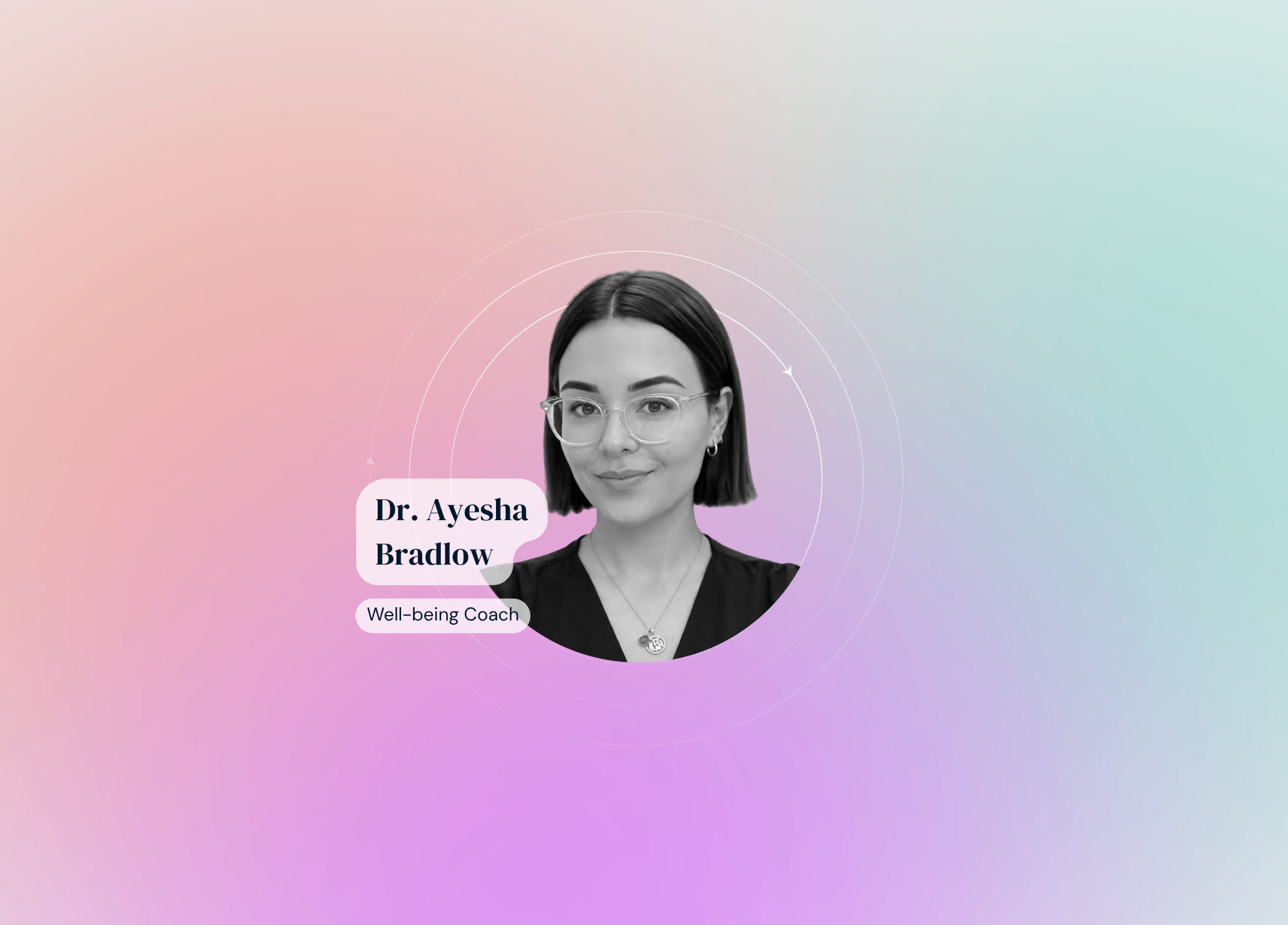
Meet Your Coach Dr. Ayesha Bradlow
“I didn’t think the coach was a human, so I didn’t engage.”
We’ve heard this quite a lot from yōjōers, and potential yōjōers have said they wouldn’t want another chatbot in their lives. We realized we hadn’t done enough to show that yōjō well-being coaches are human, that real fingers are tapping away on the other side of the chat, and that online coaching sessions are between humans. So we sent a film crew to interview Ayesha, yōjō’s well-being coach, to show that every yōjōer has a gloriously human professional supporting their journey.

Article
August 14, 2026
time
-min
read
How Do You Know If Your Nervous System Is Dysregulated?
"I just feel a bit off, not myself, but I don't really know why." Here’s why.
As a wellbeing coach and health psychology specialist, I've worked with hundreds of clients — executives running global teams, athletes preparing for competition, busy working parents spinning a dozen plates — and one of the most common things I hear, in slightly different words each time, is: "I just feel a bit off, not myself, but I don't really know why."
What strikes me is how rarely people connect that feeling to their nervous system.
It's not their fault. Nervous system regulation isn't something we're taught about in school, and the symptoms often don't feel serious enough to bring to a healthcare professional.
So when something feels off, most people don't know where to look for answers. And they end up tolerating a low-grade version of themselves for months, sometimes years, before joining the dots.
So before we get into this further, let’s do a simple check-in to see if your nervous system might be a little out of sorts.
A few questions to ask yourself
Sit with these for a moment. There's no scoring system, and this isn’t a diagnosis. Just be really honest about whether any of these describe you right now, and if there’s a pattern across more than one area.
- Do you find it hard to fall asleep even when you're exhausted? Do you wake at 2 or 3 am with a busy mind? Or, do you get a full night’s sleep yet wake unrested?
- Do you feel "tired but wired", too depleted to do much and too revved up to rest? Do you crash in the afternoons, then get a second wind late at night?
- Is your concentration patchier than it used to be? Are you losing words mid-sentence, walking into rooms and forgetting why, or finding tasks that used to be easy harder?
- Are you more reactive than usual — tearful, snappy, anxious — over things that wouldn't normally land that hard? Or the opposite: flat, numb, a little disconnected from yourself and the people around you?
- Is your jaw tight? Shoulders up by your ears? Heart occasionally racing for no clear reason? Has your digestion become unpredictable? Do bloating, reflux, irregular bowels, sensitivities seem to be multiplying?
- When something stressful happens, how long does it take you to genuinely come back down? Hours? Days? Or does it feel like you never quite return to baseline at all?
If you're nodding along to several of these — particularly across more than one category — it's worth taking seriously. This is what a dysregulated nervous system tends to look like in real life. Not dramatic. Not always alarming. Just a steady accumulation of small signals.
Why this happens — even when you're coping
Here's the part that often lands hardest with my clients: you can be coping and be dysregulated at the same time. In fact, that's the most common presentation I see.
You're still showing up, still hitting deadlines, still being a good parent, a reliable friend, a strong performer. From the outside — and often from the inside too — it looks like things are working. And they are, but your body is keeping score. And it's beginning to show you, in quiet ways, that the system needs some help.
To understand why, it helps to know a little about how your autonomic nervous system works.
Your autonomic nervous system has two main branches, the sympathetic (fight-or-flight) and the parasympathetic (rest-and-digest). A balanced system switches fluidly between the two throughout the day. You ramp up for a meeting, then come back down. You handle a stressful conversation, then return to baseline. That movement between states is what we mean by regulation.
Dysregulation isn't about being stressed. It's about losing the ability to come back down. When the body lives in a state of low-grade activation for long enough — from demanding work, caring responsibilities, illness, unresolved emotional load, or simply years of pushing through — the system stops returning to baseline between stressors.
Your sleep gets lighter. Your digestion gets touchier. Your mood gets thinner. Your thinking gets foggier. None of it is dramatic in isolation. All of it points to the same underlying issue.
The symptoms above, while seemingly random and tied to character flaws, are just your physiology responding to you running hot for too long without a proper reset.
Where to go from here
The first piece of work is recognition, which is what this article has really been about. And it is what asking yourself those questions at the top will help ignite. And if they have helped you identify something worth addressing, there is good news.
Your nervous system can relearn any flexibility it may have lost.
Quitting your job, ditching your caring responsibilities, or running away to a tropical island won’t help you rebalance your nervous system long-term. Teaching your system that it's safe to come down will. Consistently engaging in small daily rituals that activate your rest-and-digest response helps your body to learn how to switch back into this mode more easily and fast-track you back to feeling more like yourself.