


Daily vagus nerve stimulation to help you snap out of survival mode.












Constant, low-grade stress is why hardly any of us feel 100%.
yōjō activates your rest response
to strengthen your body's ability to rest, recover, and self-regulate.


Features
Everything you need and nothing you don't
to make daily vagus nerve stimulation effortless.
.webp)

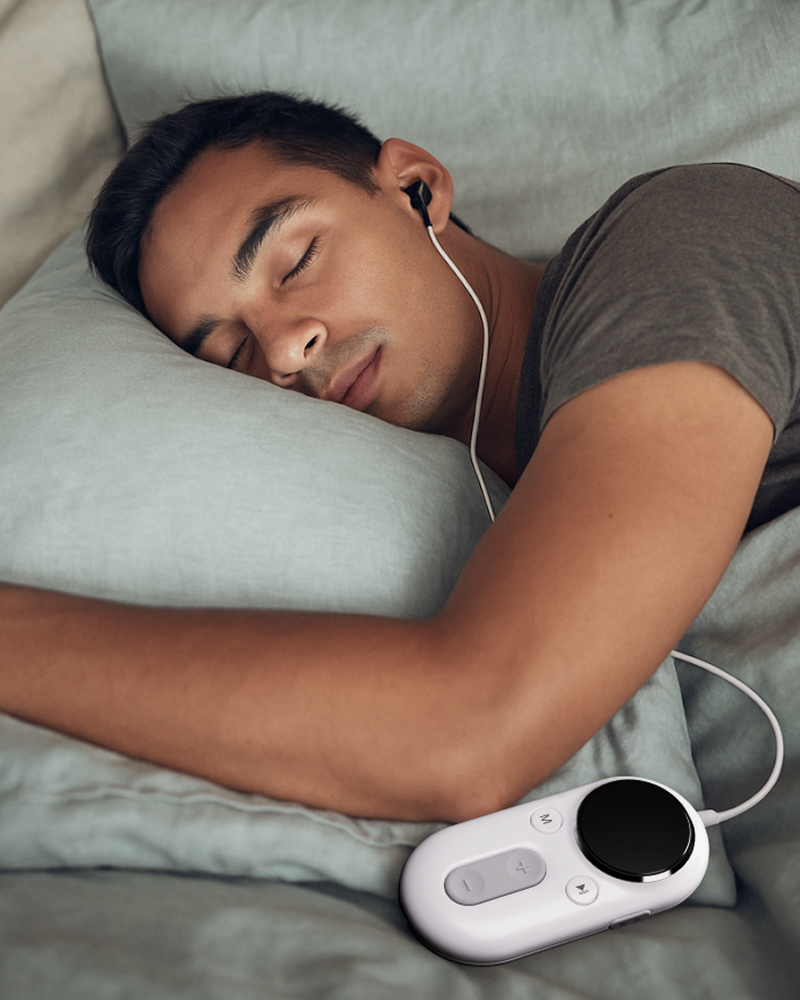
Stimulate your vagus nerve every day. Hands-free.


Track health improvements session to session.


Work with your human coach to get the most out of yōjō.


Self-activate your vagus nerve for on-the-go calm.


Understand nervous system flexibility and why it matters.



yōjō taVNS* Device
£299
once-off & yours to keep

yōjō Membership
£9.99
/ month First 2 months free
For only
£399

Personalised wellness
Custom health plan built around you

Human coaching
1-on-1 sessions with a health expert

Health tracker
Real-time biofeedback

VNS device
Hardware part of full ecosystem
You and yōjō
One simple habit that gives more than it takes

Capture pre-session metrics through a 30-second selfie.

Complete a 30-minute, hands-free vagus nerve stimulation session.


Capture post-session metrics and see each session's nervous system impact.

Behind every yōjō ritual is a real human being.
A registered health professional who knows your goals, your schedule, and what makes you tick. Turning insights into impact.


Benefits of daily vagus nerve stimulation

Testimonials
Our members notice deeper sleep, faster recovery, and better mood within days.

Other people have noticed the change in me.
Dihan

I have consistently had 6-8 hours of deep sleep for the past 3 months.
Leanne
On the evenings I use yōjō, my Oura ring sleep data is actually positively impacted.
Angela
I'm surprised how easily yōjō became a daily habit.
Tim
I haven’t had a migraine in over three weeks, the longest stretch I can remember in years.
Kira
yōjō gives me a sense of calm when I need it most.
Carol
My blood pressure is trending down, and my HRV is trending up.
Bob
Once I hit perimenopause I found I was frequently waking up at night and struggling to get back to sleep. Not anymore.
Lou
I don't get as worked up over little things, which is massive because I tend to spiral very easily.
Hannah
yōjō supports my focus and calm throughout the day.
Yaren
yōjō has helped me feel noticeably calmer, sleep better, and handle daily stress and tension with ease. It has also relieved my headaches.
Dani
I’ve explored countless treatments to manage my pain and migraines, but nothing truly fit into my fast-paced, high-pressure role until yōjō.
Andrea
I now have less pain in my body and significantly better post-exercise recovery.
Dale
I slept through the night without moving, for the first time in what feels like forever. I honestly forgot what it felt like to wake up and feel okay.
Kirsten
I now feel calmer, clearer, and more in control.
Louise
What our data shows
yōjō is working
Average increase in heart rate variability among low-HRV members in 6 months.

Average reduction in stress among high-stress members in 6 months.

Average boost in parasympathetic activity in low-PNS members in 6 months.

See how yōjō supports your unique goal

Unsure yōjō is for you?
Leave your name and email to learn more about yōjō before deciding anything.
No spam. Unsubscribe anytime.

Science
The science and wisdom that make it possible
Everything we do is backed by research, clinical experience, and real-world evidence.

André Boezaart

Gabrielle Adams

Navaz Habib

Lou Atkinson
Blog
Explore the science of better living

Article
May 8, 2026
time
-min
read
My yōjō Journey and What I Didn’t Expect
When I first started using yōjō back in December, I approached it the way I approach most wellness tools: open-minded but measured. Here’s what happened.
As a GP, I understand the science behind vagus nerve stimulation. I know the vagus nerve is the body’s master regulator, that it connects the brain to the body, and that it governs that all-important shift from ‘fight-or-flight’ into ‘rest-and-digest’. I know the mechanism, but I don’t think I really expected the impact.
I definitely wasn’t prepared for how much of a difference I would feel.
How I yōjō
My routine is simple.
Every night, when I go to bed, I grab my yōjō. I apply the gel to the earpiece and pop it in my ear. I find a comfortable intensity and then just let the gentle electrical pulses do their thing.
I also use it during the day when I remember. This is becoming more frequent because the benefits have become harder to ignore.
The sensation took a little getting used to — little electrical zaps that you have to set to your comfort level — but it quickly became something I looked forward to rather than something I had to remind myself to do.
What surprised me most
Sleep. Sleep. Sleep.
I’ve always been someone who can lie awake, mind whirring, tossing and turning for hours before finally dropping off. In the first few days of using yōjō, I noticed I was falling asleep faster.
At first, I put this down to coincidence, a good few days, or a placebo effect. But now, several months in, I can say with confidence that it is none of these.
On the nights I use yōjō versus the nights I don’t, there is a noticeable difference.
My Garmin data backs this up, too: sleep quality has genuinely improved, not just my perception of it. And that matters to me as someone who values having objective data alongside improvements in how I feel.
Getting to sleep faster has been the biggest win.
Anyone who knows that particular frustration of lying in the dark, wide awake, brain refusing to switch off, will easily understand just how significant this has been.
A shift in how I think about my nervous system
Something I didn’t anticipate was how using yōjō would make me more intentional about my parasympathetic nervous system more broadly.
Understanding something intellectually and actively working on it are two different things. yōjō has brought vagal tone into my daily awareness in a way that’s spilled over into other habits.
I now use the physiological sigh regularly — a double inhale through the nose followed by a long exhale — which is one of the fastest ways to manually activate your parasympathetic nervous system. It’s the kind of technique I’ve always known about, but yōjō has made me more motivated to layer these practices together.
I feel more in control of my own nervous system regulation, and that feeling of agency is something I hadn’t expected to value as much as I do.
Would I recommend it?
I started this journey curious. I’m continuing it as a genuine convert.
Whether you’re someone who struggles to wind down at night, feels chronically overstimulated, or simply wants to feel more grounded in your own body, yōjō offers something that is both accessible and, in my experience, genuinely effective.
The science was always there. And now I’ve felt it for myself.

.png)
Article
August 7, 2026
time
-min
read
Dr. André Boezaart’s Perspectives on nVNS
yōjō Chief Medical Officer, André Boezaart, reflects on stress, the senses, and the vagus nerve.
By André P. Boezaart, MD, PhD, FASRA
It helps to think of the human nervous system as four connected parts, each with its own job.
The central nervous system (CNS) is the brain and spinal cord. It is the command center. It handles thoughts, feelings, and decisions.
The autonomic nervous system (ANS) runs the jobs you never think about but can't live without: your heartbeat, your breathing, digestion, and blood flow.
The somatic nervous system (SNS) controls the movements you choose to make and facilitates your senses. It is your link to the outside world.
The enteric or "gut" nervous system (GUT) lives in your digestive tract. It has more nerve cells than your spinal cord, and it acts like a mind of its own, talking to the brain all day through nerve and chemical signals.
Together, these four systems work like a piece of music. Each part matters. Harmony is the goal. When one section plays too loudly, the whole piece falls out of tune.
When the stress system gets stuck
Inside the autonomic nervous system are two branches that keep each other in check.
The sympathetic system is the accelerator (fight-or-flight). The parasympathetic system is the brake (rest-and-digest).
In modern life, the accelerator often gets stuck. Alerts, deadlines, and worry keep the sympathetic system running hard, all the time.
What was meant for short bursts of alertness becomes prolonged hypervigilance. What was meant to be a useful alarm turns into slow harm.
A gland called the adrenal medulla releases catecholamines (stress hormones like adrenaline) and doesn’t stop. And another system, the hypothalamic–pituitary–adrenal (HPA) axis, releases cortisol, and doesn’t stop.
The immune system slips into a low, simmering, inflamed state. Inflammatory signals called cytokines rise, blood vessel linings work less well, and the gut wall becomes leakier and weaker.
The nervous and immune systems, which are meant to be partners, start working against each other.
Calming the body through the senses
You wouldn’t think it, but your senses play a role in spreading calm throughout your nervous system. Each of the five senses offers a direct path to the parasympathetic system. These paths evolved to tell the body one thing: you are safe.
Sight. When your eyes rest on something wide and open, like mountains or the ocean, the visual part of the brain sends calming signals inwards. This lowers activity in the amygdala, the brain's alarm center. A soft, wide gaze actually slows your heart.
Hearing. Gentle, patterned sounds calm us. Think of a mother's sing-song voice to a baby, a soft hum, ocean waves, or soothing music. These sounds work the tiny muscles in the middle ear and activate the vagus nerve. Your body tunes toward connection instead of defense.
Smell. Scent has a direct line to the brain's emotion centers. Aromas like lavender, bergamot, and frankincense lower stress activity and lift vagal tone (the strength of the calming vagus nerve).
Taste. Eating mindfully wakes up taste nerves that run along cranial nerves VII, IX, and X. This releases feel-good chemicals like dopamine and endorphins and gets digestion moving, which is part of the vagus nerve's territory.
Touch. Massage, firm pressure, and gentle skin contact switch on special nerve fibers called C-tactile afferents. These signal safety and belonging. They raise oxytocin (a bonding hormone) and boost the calming system.
Put together, these signals tell the body you are safe and free to heal.
The vagus nerve: the body's anti-inflammation highway
At the center of all this calming is the vagus nerve, the tenth cranial nerve. It is a two-way highway linking the brain, the organs, and the immune system.
About 80% of its fibers are afferent, meaning they carry information up to the brain. They send sensory signals from the organs and body, including from parts of the outer ear called the cymba and cavum conchae, back to the brainstem.
Its efferent fibers carry signals the other way, down from the brain. They switch on the cholinergic anti-inflammatory reflex.
Here's how that works: the vagus nerve releases a chemical called acetylcholine. It attaches to receptors on immune cells called macrophages. This lowers inflammatory signaling.
This link between the nervous and immune system is what allows thought, emotion, and inflammation to "talk" to each other in real time.
Bundling the senses at the ear
When we stimulate the part of the vagus nerve in the outer ear, in the cymba and cavum conchae, we tap straight into those calming afferent (sensory) pathways.
Transcutaneous auricular vagus nerve stimulation (taVNS) sends gentle electrical pulses to the very same circuits that music, touch, scent, and beauty stir up on their own.
It's as if all five senses were bundled into a single clear signal, all arriving together at a hub in the brainstem called the nucleus tractus solitarius.
Then, using the vagus nerve, the brain sends calming signals back down into the body. It steadies the heart, settles the gut, and quiets inflammation through that same acetylcholine pathway.
taVNS does not replace the senses. It amplifies their message. It reminds the nervous system what safety feels like.
Closing thought
At its heart, the path from stress to healing is a shift from sympathetic noise to parasympathetic calm.
Beautiful views, gentle sounds, soothing scents, delicious meals shared with loved ones, and a caring touch all send the same message the vagus nerve carries in every heartbeat: Be still.

Article
July 10, 2026
time
-min
read
Why Am I Wired but Tired — Even After Sleep?
While it feels like a sleep thing, feeling wired but tired is more a sign of nervous system dysregulation.
You slept. Properly. Not just an hour or two, but a full night. You canceled the meeting that was draining you, and your bloodwork came back fine, yet your body feels like it's bracing for something.
There is a reason you're feeling “wired but tired”, and it is why almost everything you try to fix the problem fails.
Let’s look at the wired part, then the tired part, before moving on to sleep.
Wired
Over time, chronic stress not only keeps the stress response going, but it also damages the mechanisms that are supposed to end it.
The stress response is managed by a system in the brain called the HPA axis.
Under normal stress, this system releases cortisol — a stress hormone — and then switches off. Under chronic stress, the off switch stops working.
Cortisol levels stay elevated. The nervous system keeps producing alerting chemicals, keeping the brain on edge even when there's nothing to be on edge about.
The nervous system can't easily tell the difference between an active threat and a habitual one. After enough time on high alert, it starts to treat that state as normal. The alarm doesn't turn off because the system has decided quietly and incorrectly that this is just how things are now.
This is the wired part.
Tired
There's a second consequence of sustained stress: low-grade inflammation.
Your fight-or-flight response evolved to prepare the body for injury. So stress primes an inflammatory response just in case you get hurt. Under chronic stress, that response never fully switches off. Inflammatory signaling proteins called cytokines stay elevated in your blood.
These pro-inflammatory cytokines talk directly to your brain, and their message is simple: there is an emergency, and we need to save energy for it. The brain responds with a set of changes that we all associate with being sick: deep fatigue, low mood, reduced motivation, social withdrawal, and difficulty thinking clearly.
What these days is often taken for weakness is merely an energy-saving strategy. Your body is doing exactly what it is built to do. It has just incorrectly decided that the threat is still active.
This is the tired part.
Why sleep doesn't fix it
Sleep can’t resolve this problem because sleep happens on top of this high-alert state.
In a healthy system, cortisol is highest in the morning and lowest at night. This helps regulate when you feel awake and when you feel sleepy. Under chronic stress, this rhythm gets disrupted. Your nervous system stays activated into the evening, making it harder to fall asleep and less likely for sleep to feel restorative.
Getting out of this loop requires nudging your body out of stress mode and into recovery mode.
And your vagus nerve is key here. It helps manage inflammation and is the pathway your body uses to switch from stress to rest.
What the target actually is
The underlying issue is an imbalance in the autonomic nervous system. The alert system is stuck and becoming sensitive to threat signals while the recovery system has lost its grip. The fix, then, has to address that directly.
The target is vagal tone.
Not a one-off reset, but a consistent practice that gradually shifts the nervous system back toward balance.
Evidence suggests that regular activation of the recovery system — through breathwork, vagus nerve stimulation, and structured recovery practices — can build resilience against chronic stress. It can reduce the inflammatory signals driving fatigue and help the nervous system relearn what calm feels like.
Wired but tired has a specific mechanism and specific target. A binge of sleep will help in many other ways, but for this dysregulation, small, repeated inputs matter more than dramatic resets.
Why the Vagus Nerve?
Healthy vagus nerve, healthy you
Relaxation is your body’s preferred state. Stress pulls you out of that state, and the vagus nerve brings you back. A healthy vagus nerve is essential to long-term health and well-being.
Here’s all you need to know about the vagus nerve.

It’s a reset button
The vagus nerve releases acetylcholine, a key neurotransmitter that smooths muscle contractions, widens blood vessels, and slows heart rate.

It’s a highway
The vagus nerve is the 10th cranial nerve and connects your brain to your heart, lungs, gut, liver, spleen, and kidneys.

It’s ancient
Each branch of the vagus nerve is a chapter in evolutionary adaptation, from reptilian survival to human connection.

It’s long
Known as “The Wanderer”, the vagus nerve is the longest cranial nerve, coursing throughout your body.

It’s anti-inflammatory
The vagus nerve is central to the cholinergic anti-inflammatory pathway, your body’s natural mechanism preventing chronic inflammation.

It’s busy
The vagus nerve influences heart rate, blood pressure, breathing, digestion, inflammation, immunity, gut health, emotion, cognition, speech, and taste.

It’s struggling
Modern life keeps us in a sympathetic state. The more often you’re in this state of stress, the harder it is for your vagus nerve to keep up.

It’s changeable
Regular vagus nerve stimulation, healthy lifestyle choices, and stress management techniques help to improve the vagus nerve’s efficiency over time.
FAQs
Got questions? We’ve got answers.
Is yōjō a vagus nerve stimulation company?

Is yōjō safe?
Can my kids use the yōjō device?
Who can use my yōjō device?
Who should not use the yōjō device?
Is my data safe?
Do you share my data?
How often can I use the yōjō device?
How will yōjō help me?
Does science support the efficacy of the yōjō VNS device?
How soon can I expect results from yōjō?
What am I buying?
What does the yōjō app track?
Is the yōjō device a medical device?
How do I pair the yōjō device and app?
How do I know my yōjō device is working?
How long does the yōjō device take to charge?
How does the face scan work?
How do I contact my well-being coach?
What should I do if the yōjō device causes discomfort?
What do I do if my earpiece stops working?
What makes yōjō different?
What is the vagus nerve, and why is it important?
What does the yōjō device do to the body?
Is vagus nerve stimulation natural?
What are the benefits of stimulating the vagus nerve?
Mingle with us
Join the yōjō conversation

